
What You Need to Know Before Your Cabo Trip: History, Culture & Why It's Different
If you've been watching the news about Mexico lately, you probably have some questions. We get it. Your mom sent you a link. Your coworker said something at lunch. Maybe you saw a headline scroll by and thought, "wait, should I still go?"
Here's what we can tell you as people who actually live in Cabo San Lucas: right now, as you're reading this, people are sitting by their pools, heading out on boats, eating incredible food, and having the vacation of a lifetime. That's not spin. That's just a regular day in Cabo.
This isn't a packing list. This isn't "top 10 things to do in Cabo" (we have those too, don't worry). If you're planning a trip to Cabo and you want the real story, the actual context that the news doesn't give you, keep reading. We live here. We work here. We've helped thousands of people plan their trips. So let us break it down for you.
What happened in Jalisco on February 22nd was serious. We're not going to pretend it wasn't. But it also proved something that people who know Baja have understood for years: Cabo is a completely different place. And once you understand why, you'll never look at a Mexico headline the same way again.

Why Cabo San Lucas Is Not Mainland Mexico
This is the part that most people don't know, and it changes everything.
It's Literally Separated by an Ocean
Pull up a map. Seriously, do it right now. Baja California is a peninsula that hangs down the west coast of Mexico, separated from the mainland by the Sea of Cortez (also called the Gulf of California). There are no roads connecting Cabo to mainland Mexico. None. You either fly or you take a ferry.
The events that happened in Jalisco and Puerto Vallarta? About 300 miles away, across open water. That's like hearing about something happening in Cuba and canceling your trip to Miami. They're technically in the same region on a map, but they're completely different places with completely different realities.
Geographically, Cabo is actually closer to San Diego than it is to Puerto Vallarta. Think about that for a second. When you fly into Los Cabos International Airport, you're landing on what is essentially an island. The Baja peninsula is surrounded by water on three sides and connected to the US border on the fourth. That isolation isn't a bug. It's a feature.
The Economy Here Runs on Tourism
Baja California Sur's economy is over 90% tourism-driven. Let that sink in. This isn't a place where tourism is one of many industries. It IS the industry. Every restaurant, every hotel, every boat captain, every shop owner, every driver depends on visitors having an amazing time and coming back.
You know what that means in practice? Safety isn't just a talking point here. It's the foundation of the entire economy. The local government, the businesses, the community, everyone is invested in making sure visitors feel safe, welcome, and taken care of. Because if they don't, everything stops.
There are no cartel turf wars in Cabo because there's nothing to fight over. It's resorts, restaurants, fishing boats, and vacation villas. That's it. The "product" here is a good time, and everyone is working together to deliver it.
Built for International Travelers
San Jose del Cabo International Airport (SJD) handles over 300 direct flights from the US and Canada every single week. Let that number hit you. That's not a small regional airport. That's a major international hub.
You can pay in US dollars pretty much everywhere. English is widely spoken at restaurants, hotels, and shops. There are world-class medical facilities including hospitals that cater specifically to international patients. The highway system is modern and well-maintained.
Honestly? Cabo is more connected to Los Angeles and Phoenix than it is to Guadalajara. The infrastructure here was built for international travelers from the ground up. It shows in every detail, from the moment you land to the moment you leave.
Millions of Americans come to Cabo every year. The biggest risk most of them face? Sunburn.
Find Your Perfect Villa in Cabo
Browse our curated collection of luxury villas with private pools, ocean views, and dedicated concierge service. From beachfront escapes to hillside retreats.
Browse Villas
From Fishing Village to World-Class Destination
Cabo wasn't always like this. For most of its history, it was one of the most remote places in North America. Understanding where it came from makes you appreciate what it's become.
The Early Days
Long before the resorts and the marina, the southern tip of Baja was home to the Pericu people. They were fishermen, hunters, and gatherers who lived off the land and sea for thousands of years. When the Spanish arrived in the 1500s, they found a harsh but beautiful landscape: desert meeting ocean, with some of the richest waters on earth.
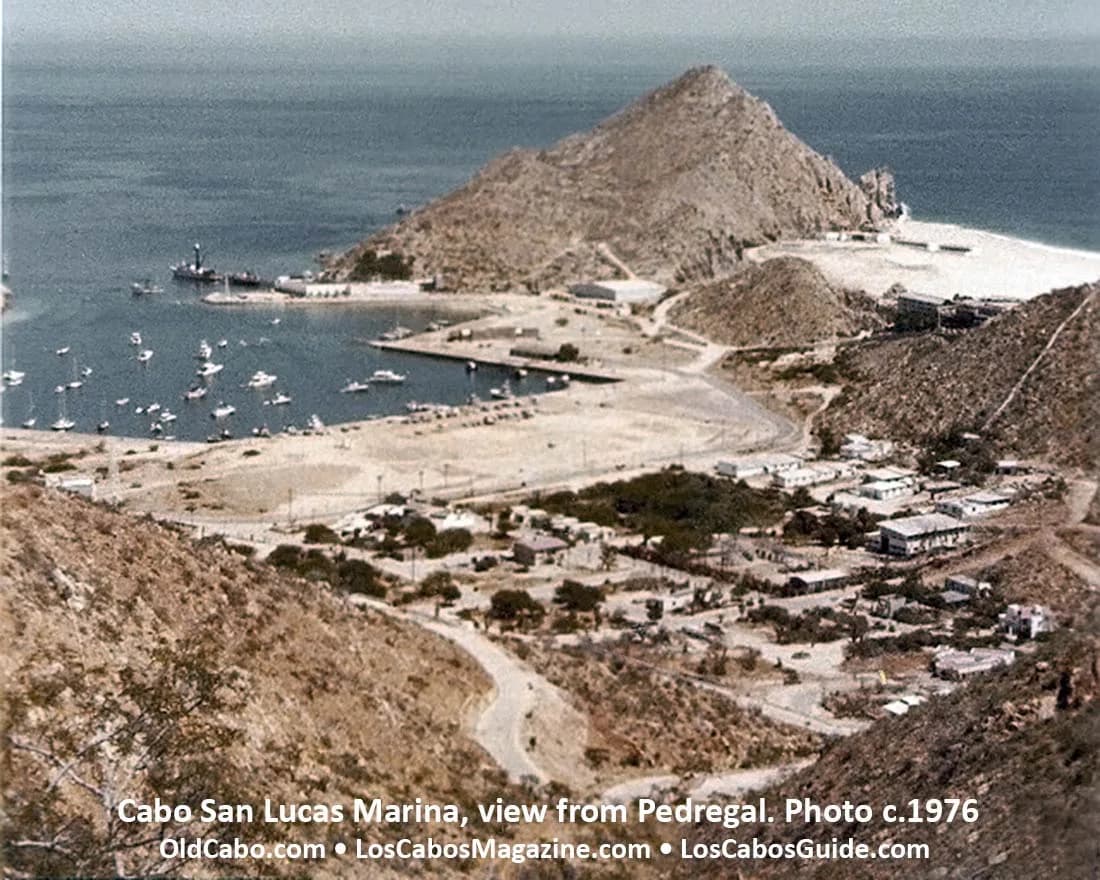
For centuries after that, Cabo was known for two things: pearl diving and tuna. A cannery operated near the harbor for decades, and the town was essentially a small fishing village at the end of the world. Beautiful, remote, and largely forgotten.
Hollywood Discovers Cabo
Then, in the 1950s and 60s, something changed. American sportfishermen started hearing about the incredible marlin fishing off the coast of Baja. Guys like Bing Crosby and John Wayne started flying down in private planes, staying in basic fishing camps, and pulling massive fish out of the Pacific.
Word got out fast. The fishing was world-class, the scenery was unreal, and there was almost nobody else there. It was like finding a secret. Crosby reportedly loved it so much that he helped fund one of the first small hotels. The Hollywood connection put Cabo on the map, even if the "map" at that point was mostly a whisper network among celebrities and adventurers.
The Boom
In 1973, Mexico completed the Transpeninsular Highway, a 1,000-mile road running the length of the Baja peninsula from Tijuana all the way down to Cabo. That was the turning point. Suddenly, you could actually drive there (if you were up for a very long road trip).
FONATUR, Mexico's tourism development fund, saw the potential and invested heavily. Resorts started going up. The marina was built. The airport expanded. By the 1990s, Cabo had transformed from a dusty fishing village into a legitimate luxury destination.
And then came the golf courses. And the mega-resorts. And the farm-to-table restaurants. And the private yacht charters. The rest, as they say, is history. But the soul of the place, that fishing village spirit, the community, the connection to the ocean, that never went away. It just got a really nice upgrade.
Book Unforgettable Cabo Adventures
From ATV desert tours to snorkeling at Chileno Bay, zip-lining over canyons to sunset horseback rides on the beach. Cabo's adventures are as diverse as its landscape.
Explore Adventures
February in Cabo: The Best Month to Visit
If you had to pick one month to come to Cabo, February would be it. And it's not even close.
Perfect Weather, Peak Whale Season
February in Cabo means 75 to 80 degrees every single day. Zero rain. Clear skies from morning to night. The water temperature is perfect for swimming, and the snorkeling visibility is as good as it gets all year.
But here's the real showstopper: whale season. Every winter, humpback whales migrate to the warm waters around Cabo to breed and give birth. In February, they're everywhere. You can see them breaching right from the shore, or you can get up close on a whale watching boat tour. It's one of those experiences that sounds cool in theory and then completely blows your mind in person. We've lived here for years and it still gets us every time.
Dia de la Bandera and Carnival
February 24th is Dia de la Bandera, Flag Day in Mexico. It's a big deal. There are parades through town, celebrations in the plazas, and a real sense of national pride and community energy. It's not a tourist event. It's a local one. And getting to experience that is special.
Carnival also falls around this time, depending on the year. Think music, dancing, costumes, food vendors lining the streets, and an energy that you just can't manufacture. It's Cabo at its most alive. Not the resort version. The real version. The community version. The one where you realize this isn't just a vacation spot. It's a place where people live, raise families, celebrate, and take enormous pride in where they're from.
February is peak Cabo. If you're here right now, you already know what we're talking about.
See the Arch and Watch Whales
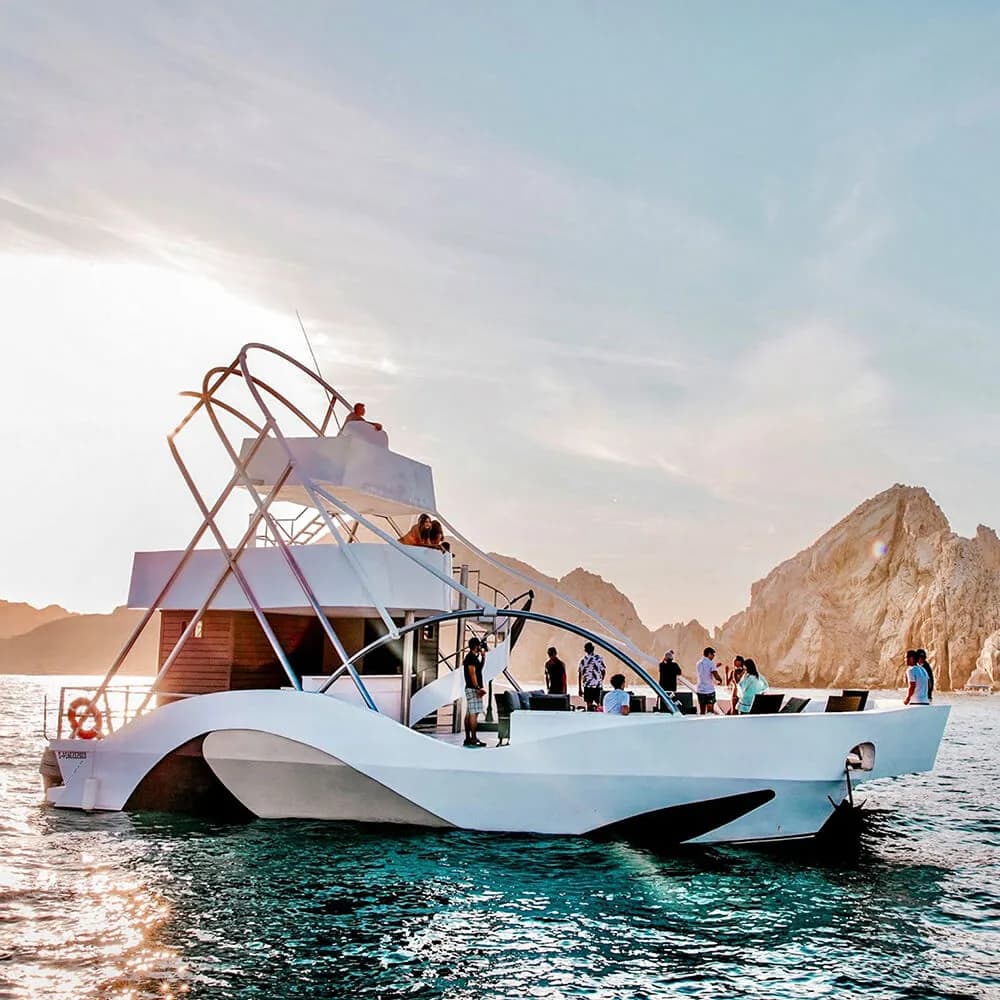
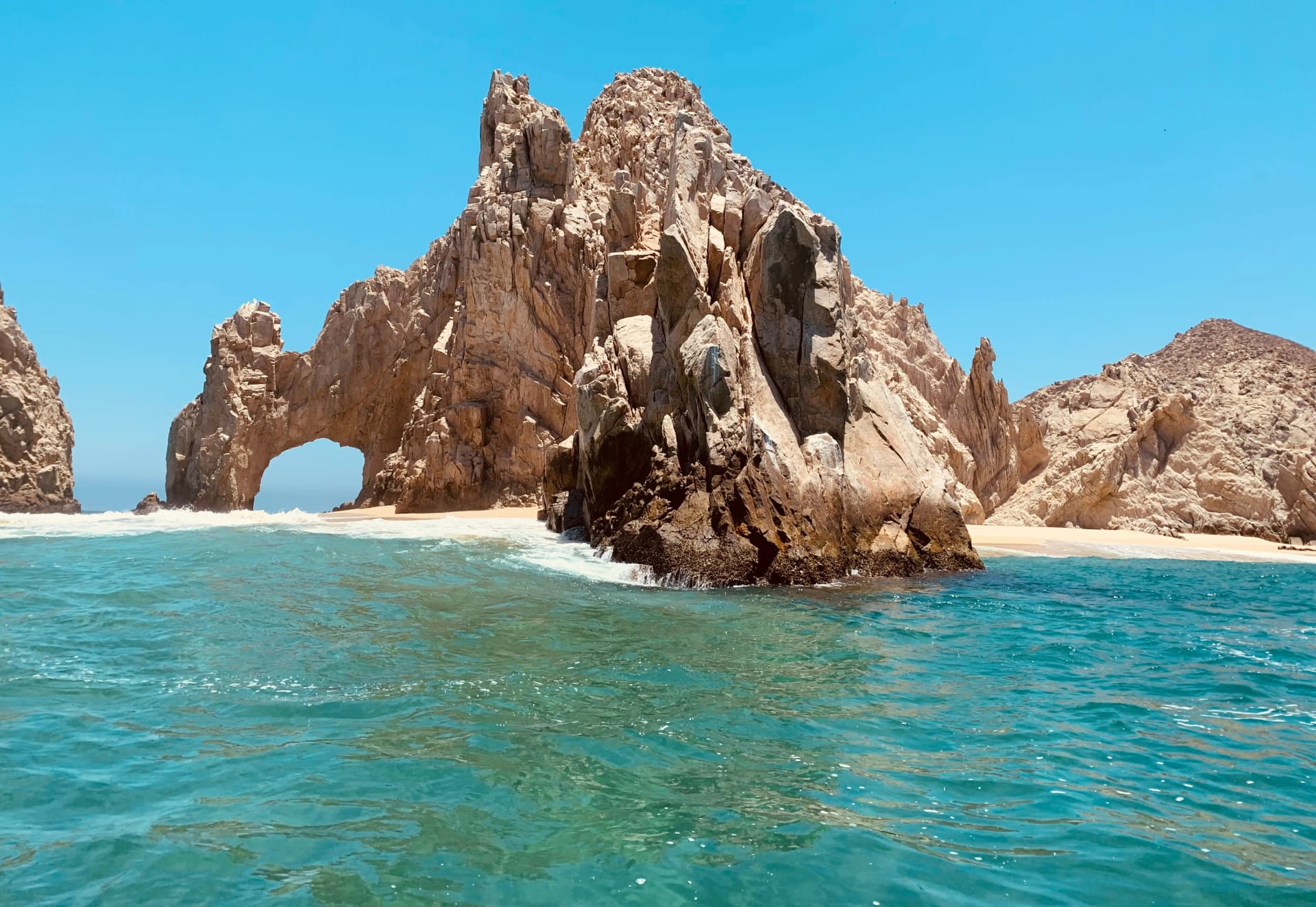
Charter a private yacht to cruise past Land's End, see the famous Arch up close, and watch humpback whales breach in the Sea of Cortez. Peak season runs through March.
View Yacht ChartersThe Two Cabos, and Everything in Between
Here's something that surprises a lot of first-time visitors: there are actually two towns, and they have completely different personalities.

Cabo San Lucas
Cabo San Lucas is the one most people picture. The marina. The nightlife. The Arch at Land's End. Beach clubs bumping music all afternoon. This is the energy side of Los Cabos. It's where you go when you want action, people, restaurants with views, and that vacation buzz. The marina alone has dozens of restaurants, bars, and shops. You can walk the whole thing in an evening and never run out of things to do.
San Jose del Cabo
San Jose del Cabo is the other side of the coin. It's quieter, more artistic, more rooted in local culture. The Thursday night Art Walk through the gallery district is legendary. There are organic farms on the outskirts of town, colonial architecture in the center, and a dining scene that's more intimate and chef-driven. If Cabo San Lucas is the friend who wants to go out, San Jose is the friend who wants to find the best little restaurant nobody knows about.

The Corridor
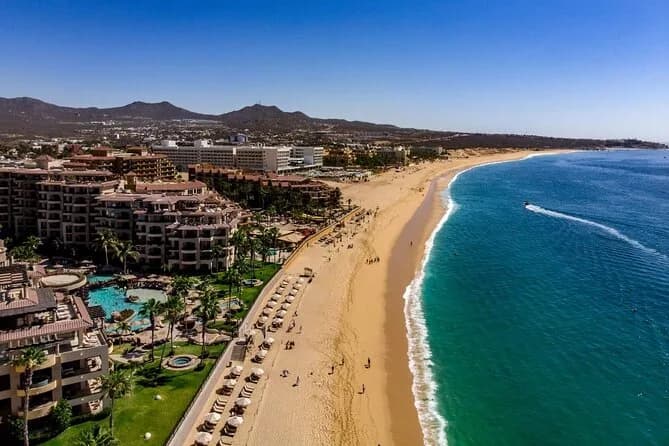
The Tourist Corridor connects the two towns along a stunning stretch of coastline. This is where you'll find the mega-resorts, championship golf courses (we're talking courses designed by Jack Nicklaus and Tiger Woods), and some of the most beautiful hidden beaches in Mexico. It's about 20 miles of coastline, and every mile of it is gorgeous.
Two completely different vibes, 20 minutes apart. Most people don't realize that until they get here. And once they do, they usually end up spending time in both.

Planning Your Stay: The Villa Advantage
This is where we get a little biased, but hear us out. Because once you understand the villa option, the resort thing starts to feel... limited.
Why Villas Beat Resorts
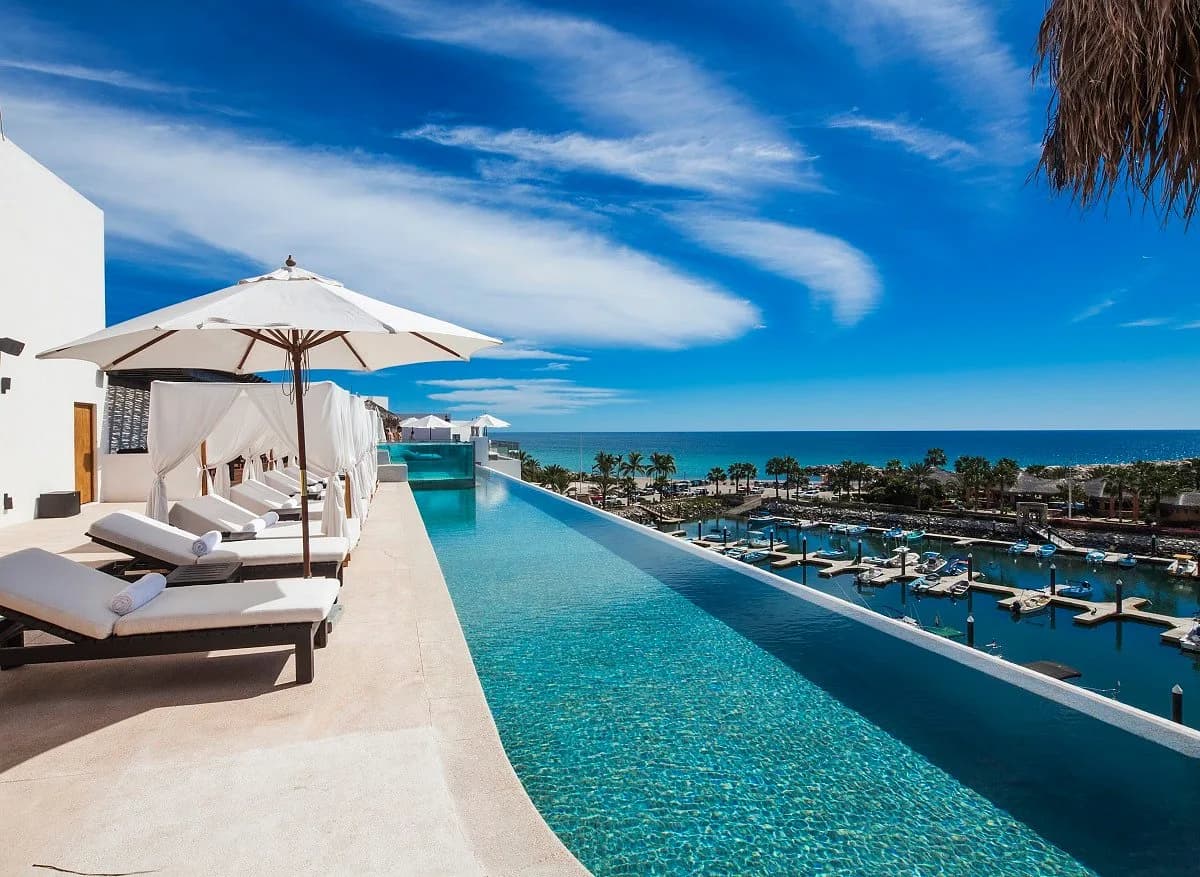
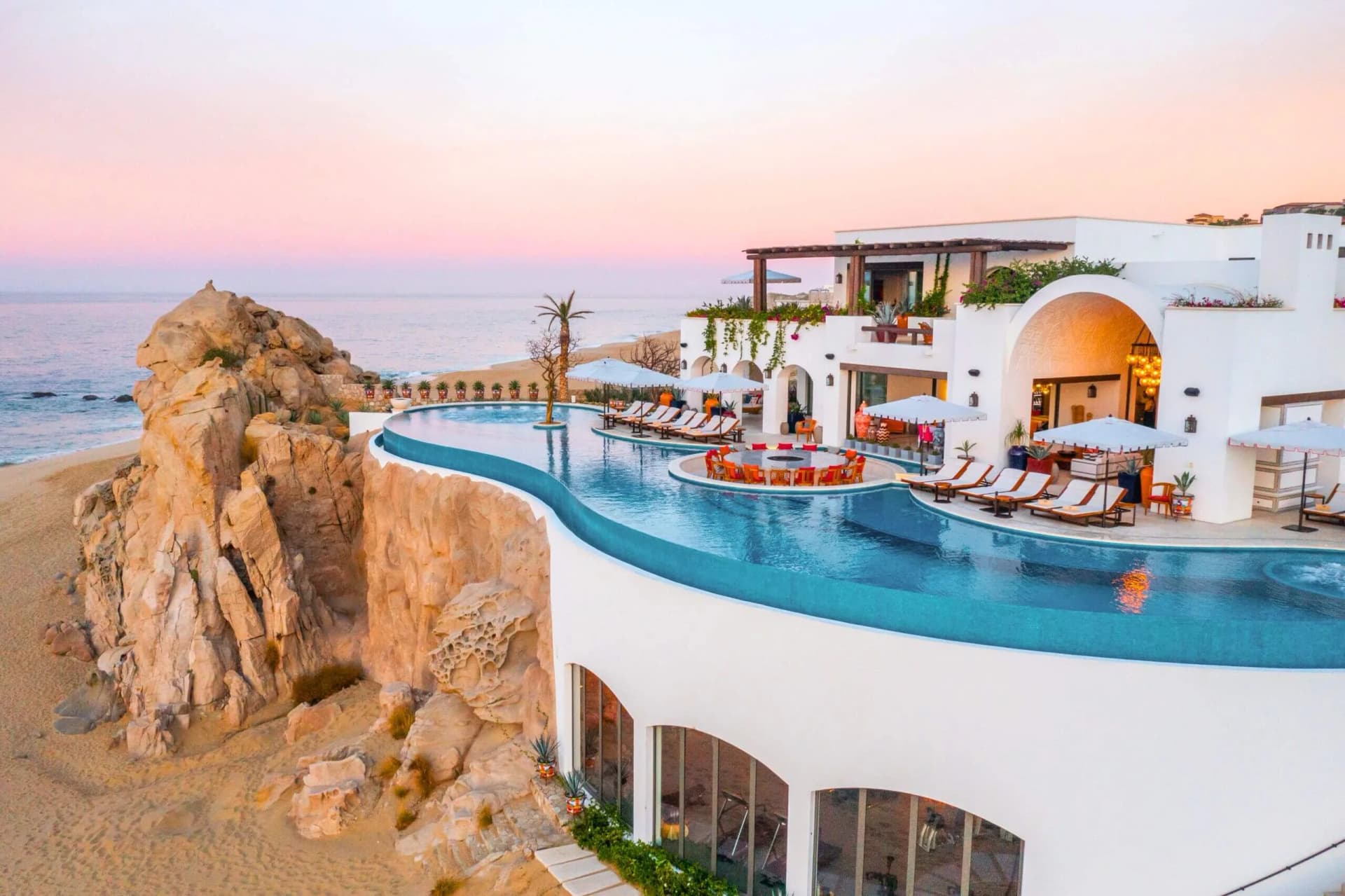
A luxury villa in Cabo gives you things a resort simply can't. Your own private pool. Multiple bedrooms (some of our villas have 8+). A full kitchen. Outdoor living spaces with views that would cost you $2,000 a night at a resort. And a dedicated concierge who handles everything from grocery stocking to dinner reservations to adventure bookings.
Here's the part nobody tells you: when you split the cost of a villa with a group of friends or family, it often works out cheaper per person than a resort. Seriously. You get more space, more privacy, your own pool, and you spend less money. The math just works.
Getting Around
One of the most common questions we get is "do I need a car?" Short answer: no. We arrange airport transfers, private drivers, and can set up transportation for anything you want to do. Want to hit the marina for dinner? Done. Day trip to Todos Santos? We'll set it up. Need a ride to the golf course at 6am? No problem.
That's literally what we do. You don't need to figure out logistics. You just need to show up and tell us what sounds good. We handle the rest.
The smartest travelers don't book a room. They book a house.
Let Us Plan Your Entire Trip
Our luxury concierge team handles everything: villa selection, airport transfers, chef services, adventure bookings, restaurant reservations, and every detail in between.
Learn About Concierge Sunset Monalisa in Cabo San Lucas with ocean views" style="width: 100%; border-radius: 16px; object-fit: cover; max-height: 480px;" />
The Food Scene You Didn't Expect
We need to talk about the food, because this is where Cabo genuinely surprises people. This isn't just tacos and margaritas (although the tacos and margaritas are incredible). The dining scene here has exploded in the last few years, and it rivals cities ten times the size.
World-Class and Getting Better Every Year
Japanese-Mexican fusion? It's a thing here, and it's amazing. Farm-to-table dining at places like Flora Farms, where you eat under the stars surrounded by the actual farm that grew your food? It exists, and it's one of the best meals you'll ever have. Seafood so fresh that the fish was in the ocean that morning? That's every day here.
The marina in Cabo San Lucas has an entire row of waterfront restaurants ranging from casual to upscale. San Jose del Cabo's art district has its own completely different dining vibe: intimate, chef-driven spots with creative menus that change with the seasons.
Beyond the Plate
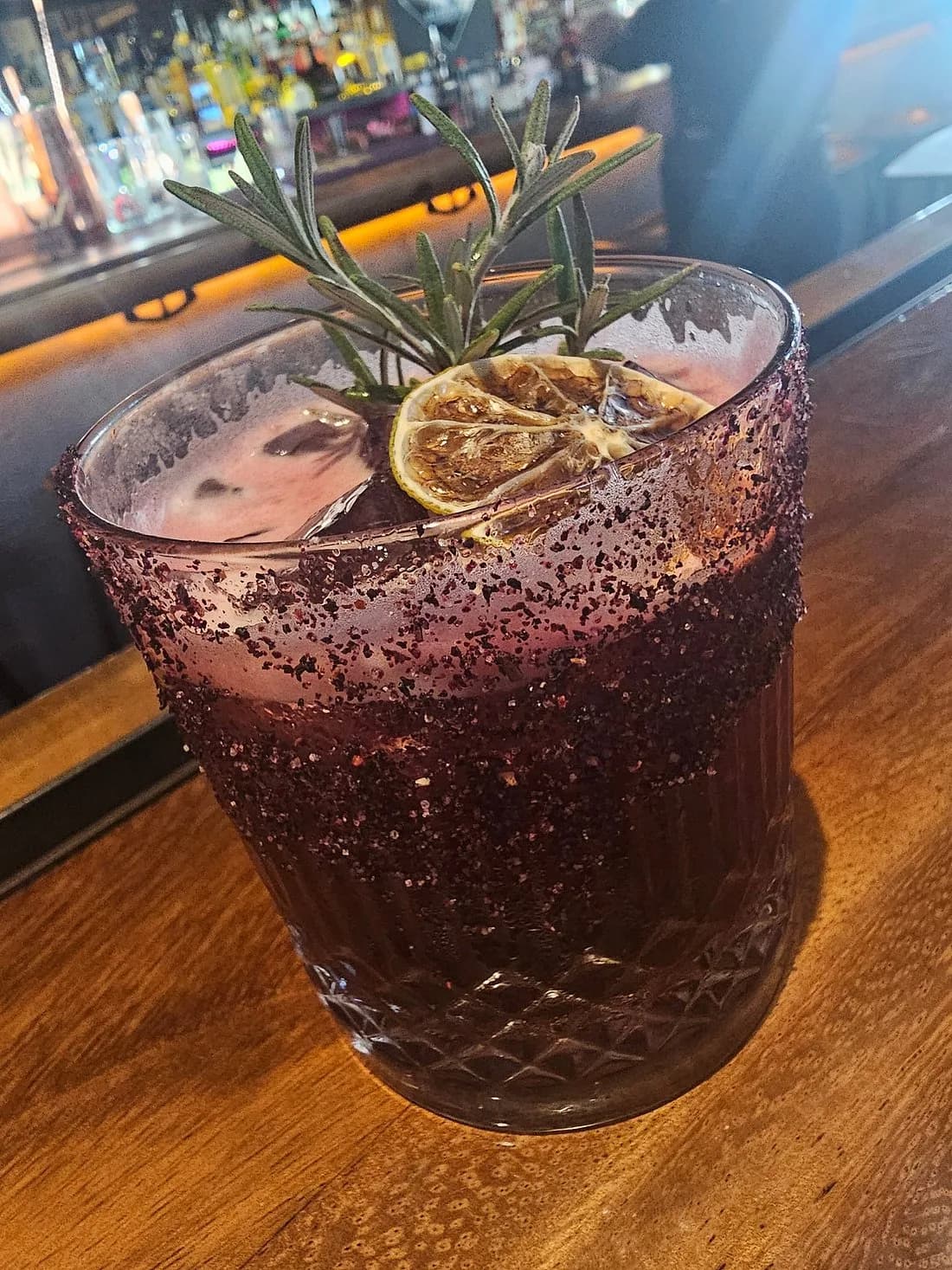
The drink scene is just as good. Tequila and mezcal tastings are everywhere, and we're not talking about the shot-and-lime stuff from college. These are curated experiences with small-batch spirits that will change how you think about agave. The craft cocktail bars here would fit right in on any list of best bars in the US.
People come to Cabo for the beach and end up talking about the food for months after they get home. We hear it all the time. Don't sleep on the dining. It might be the best part of your trip.
Discover Cabo's Best Restaurants
From oceanfront fine dining to hidden local gems, our curated restaurant guide covers the best of Cabo San Lucas and San Jose del Cabo. Reservations arranged by our concierge team.
See Restaurant Guide
5 Things You Can't Leave Cabo Without Doing
If this is your first time (or even your fifth), here's our short list of non-negotiables:
- See the Arch from the water. You can look at photos all day, but being on a boat as you cruise past Land's End is something else entirely. Do this at sunset if you can.
- Watch a Baja sunset from a villa terrace. There's a reason people talk about sunsets here. The sky turns colors you didn't know existed. Do it with a drink in your hand and nowhere to be. That's the villa life.
- Eat the freshest fish of your life. Whether it's a high-end restaurant or a beachside taco stand, the seafood here is on another level. Don't overthink it. Just order whatever came in that day.
- Day trip to Todos Santos or the East Cape. Both are about an hour from Cabo and both feel like different worlds. Todos Santos is an artsy surf town with incredible galleries. The East Cape is rugged, raw Baja at its best. Book it through our adventures page.
- Do absolutely nothing by your private pool. Seriously. Sometimes the best thing you can do on vacation is nothing at all. Float, read, nap, repeat. Nobody's judging. That's the whole point.
The Bottom Line
Look, Cabo isn't just a beach town. It's its own world. A peninsula surrounded by ocean, powered by tourism, built for travelers, and filled with people who genuinely love sharing this place with visitors.
The biggest decisions you'll make here are which beach to hit and what to order for dinner. That's it. That's the stress level.
We live here. We love it here. And we'd love to help you see why millions of people keep coming back, year after year. If you're thinking about a trip, reach out to us. We'll take care of everything.
See you in Cabo.
Plan Your Cabo Trip With Us
Let our local experts help you plan the perfect Cabo vacation with villas, yachts, adventures, and dining reservations.
Start PlanningStay in the Loop
Get the latest Cabo travel tips and exclusive deals delivered to your inbox.